Excursions from Marrakech: Ourika, Atlas, Agafay or Essaouira – which one to choose?

After a few days in the bustle of the Medina, there's nothing like a day in the great outdoors. Less than three hours' drive from Marrakech lie landscapes of incredible diversity: Berber mountains, stony desert, waterfalls and the ocean. Here is our selection of the best excursions from Marrakech, so you can choose according to what you love.

The Ourika Valley: nature an hour from the city

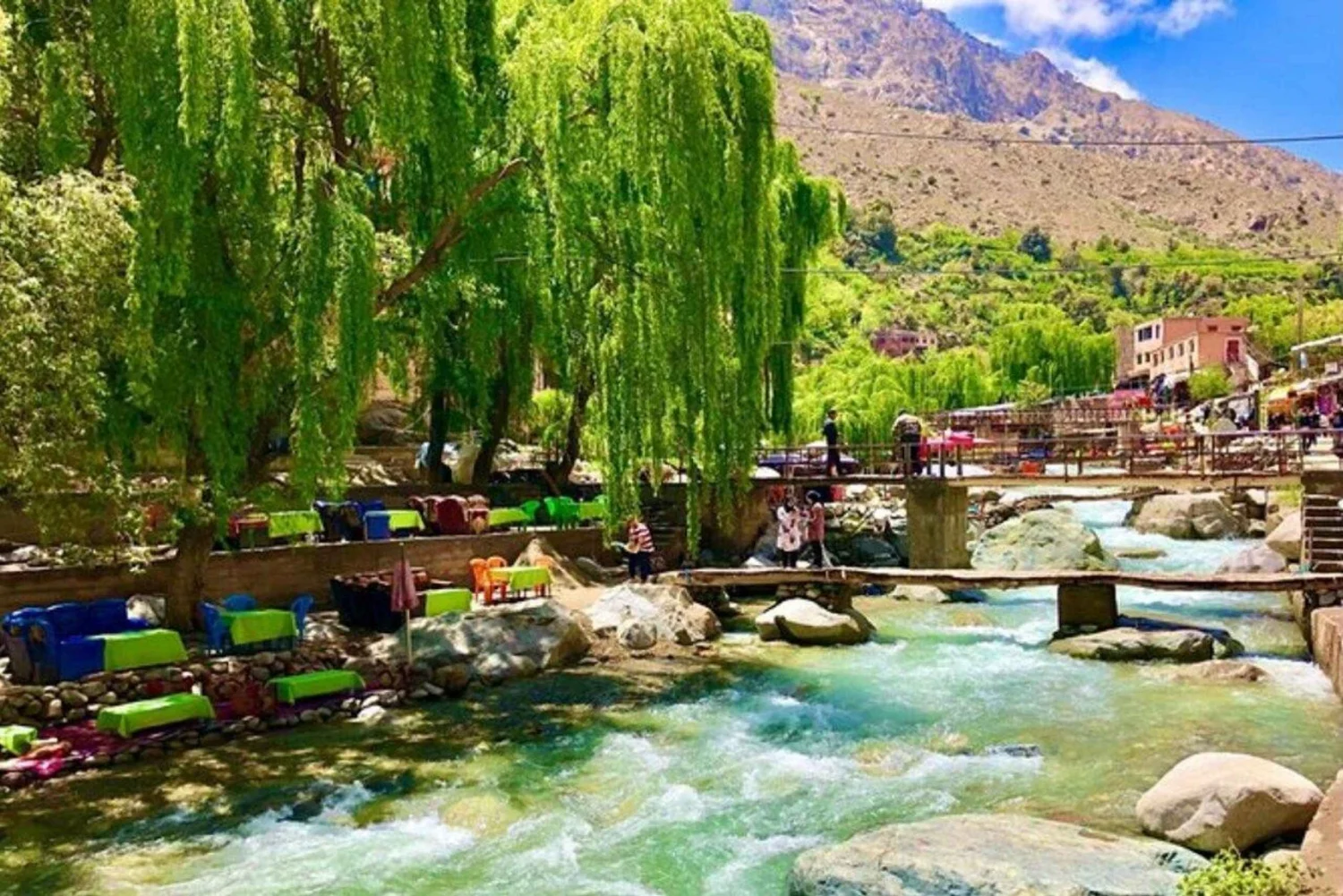
Ourika Valley in the High Atlas, a day trip from Marrakech

About an hour's drive away, the Ourika Valley winds along the foot of the High Atlas. Here you'll find Berber villages clinging to the slopes, argan oil cooperatives and, at Setti Fatma, a series of waterfalls reached by an easy to moderate hike. Lunch on a tajine by the river is all part of the ritual.

Ideal for: families and anyone wanting a first taste of the mountains without too much driving.

Imlil and the High Atlas: at the foot of Toubkal

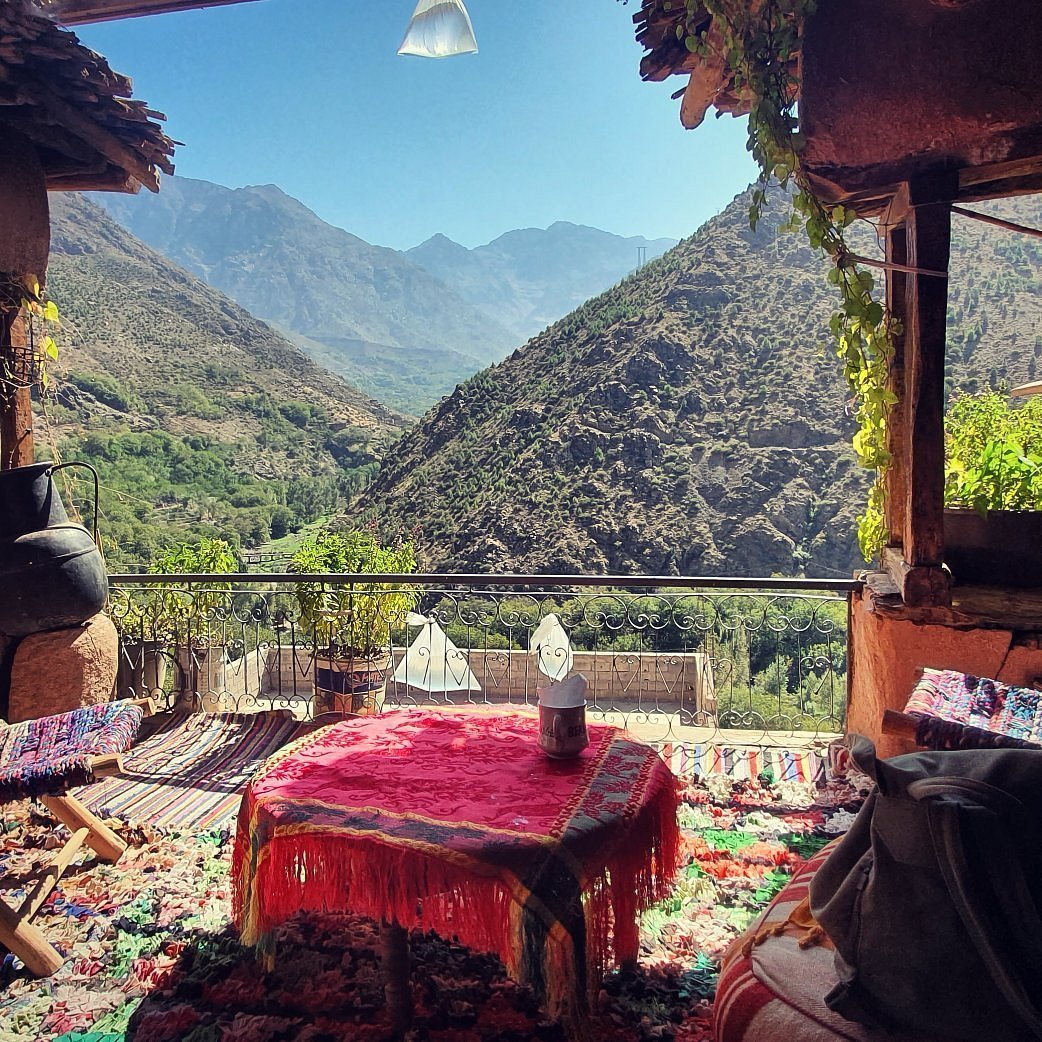
The village of Imlil at the foot of Toubkal, hiking in the High Atlas from Marrakech

About an hour and a half from Marrakech, the village of Imlil is the starting point for treks to Toubkal, the highest peak in North Africa (4,167 m). Even without aiming for the summit, a walk of a few hours among walnut trees, cultivated terraces and mud-brick villages offers spectacular views. Mint tea in a local family's home is often the best memory of the day.

Ideal for: walkers and lovers of wide open spaces. Bring good shoes and a warm layer, even in spring.

The Agafay Desert: the desert on Marrakech's doorstep

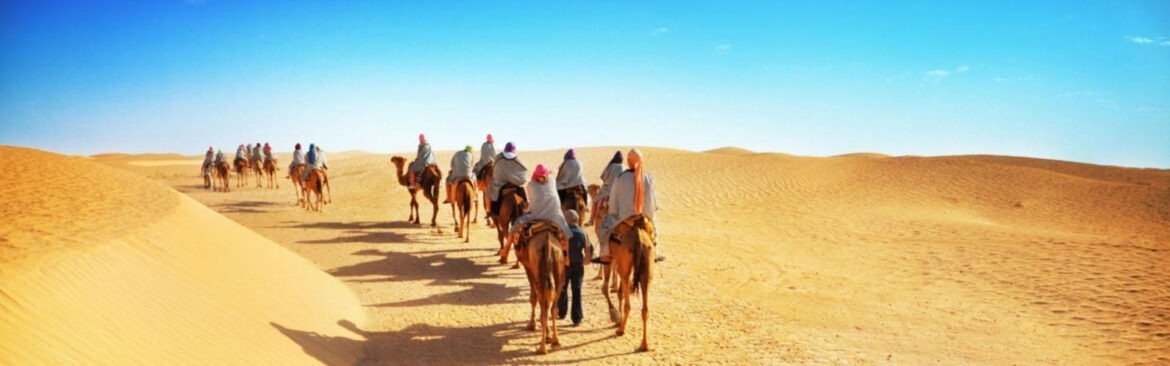
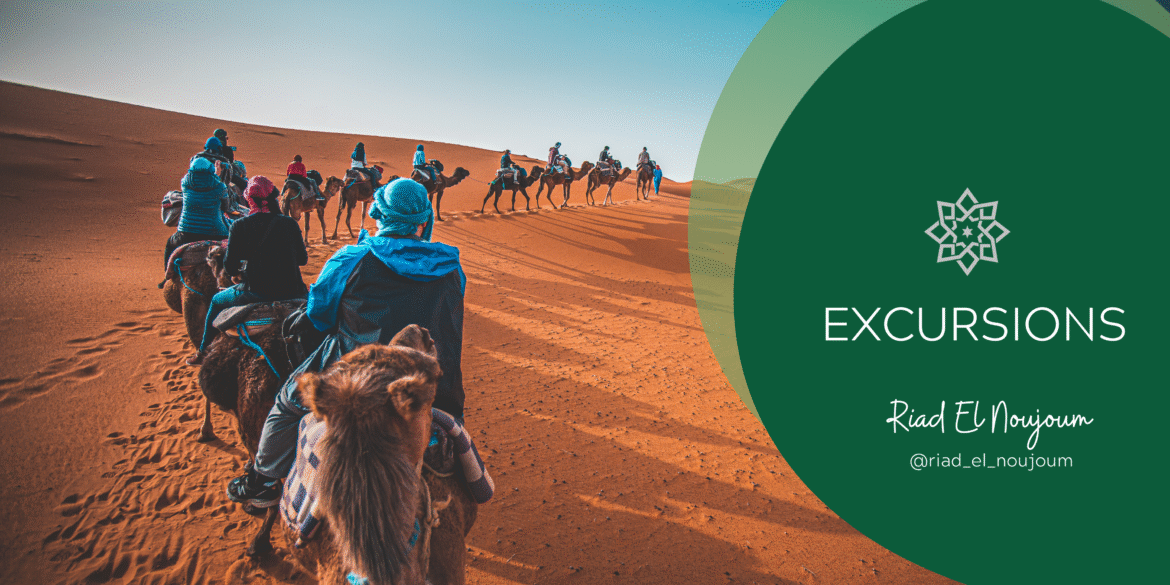
Less than an hour's drive away, the Agafay Desert is not a desert of sand dunes but a stony plateau of rolling hills, with the snow-capped Atlas as a backdrop in winter. A camel ride, quad biking, buggy driving or simply dinner in a tent at sunset: it's the perfect excursion for half a day or an evening.

Ideal for: couples, short stays and those who don't have time to go all the way to the Sahara.

The Ouzoud Falls: the highest in Morocco

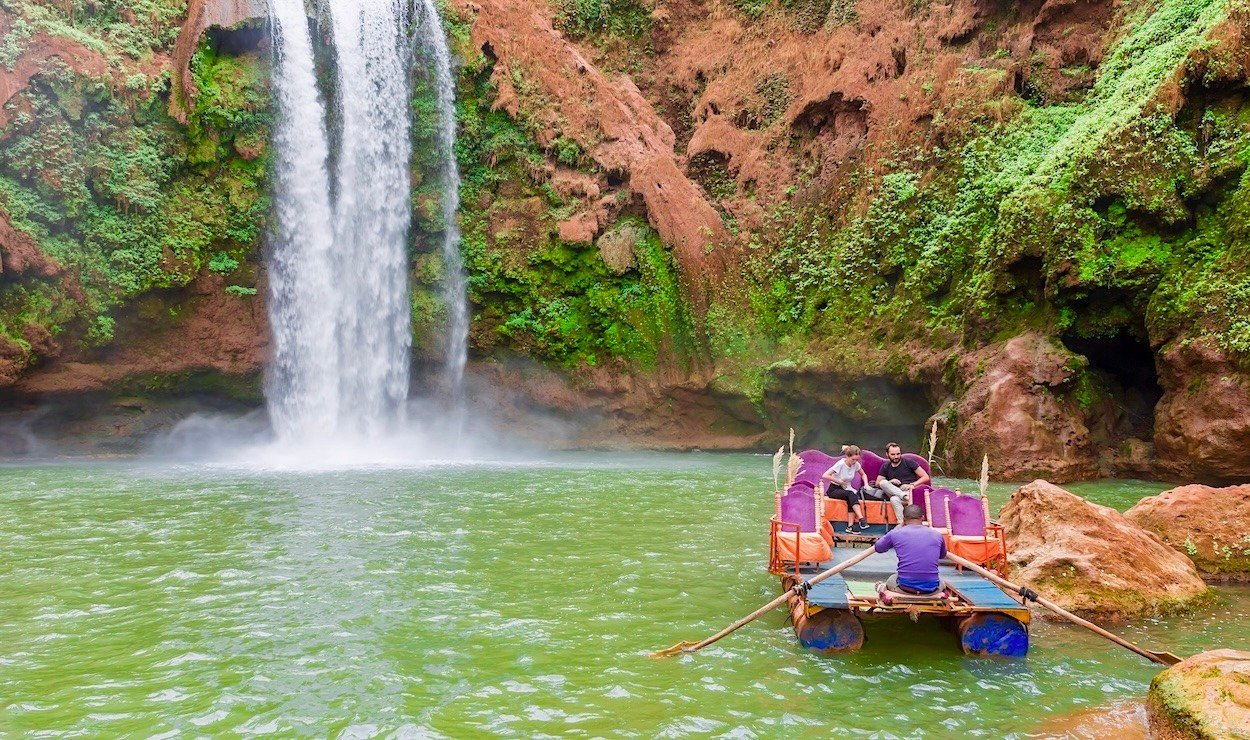
Ouzoud Falls, the highest waterfalls in Morocco, an excursion from Marrakech

About two and a half hours to the north-east, the Ouzoud Falls plunge some hundred metres into lush green surroundings. A path lined with olive trees leads down to the foot of the falls, where you're very likely to spot Barbary macaques. A boat ride at the base of the falls rounds off the visit.

Ideal for: nature and photography lovers. Allow a full day.

Essaouira: the ocean and the windy city

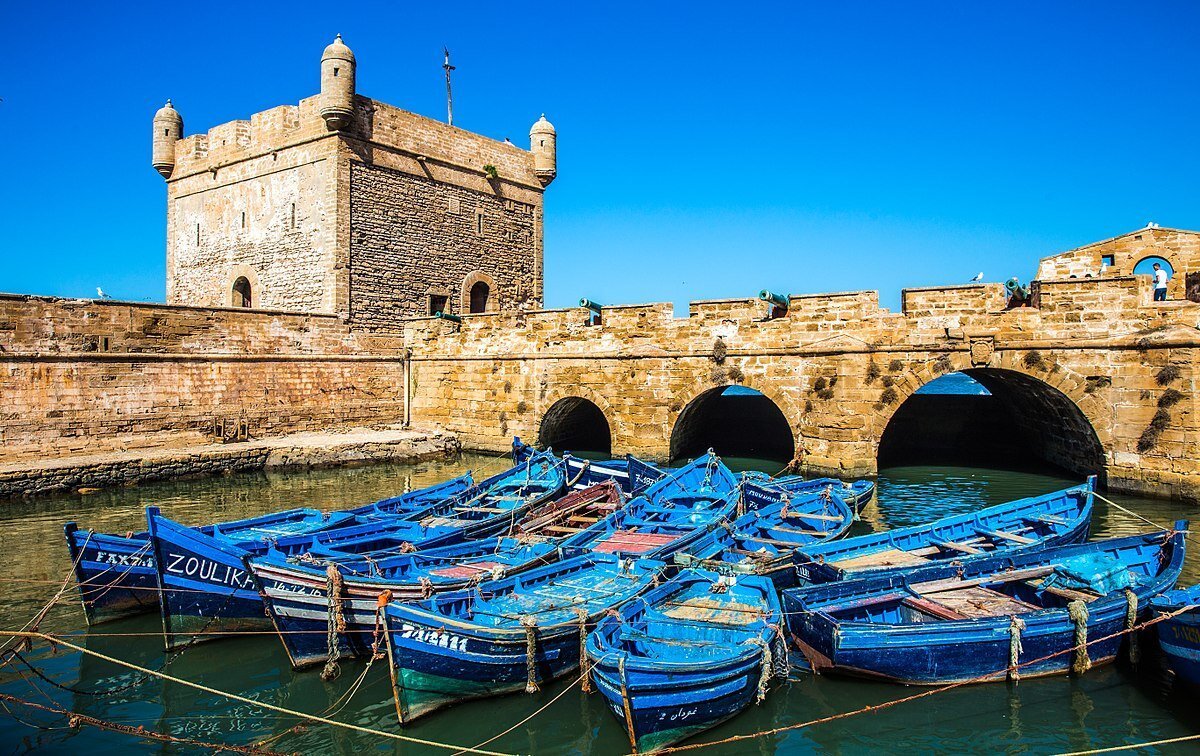
Essaouira's harbour and ramparts facing the Atlantic, a day trip from Marrakech

Around two and a half to three hours' drive away, Essaouira is the perfect counterpoint to Marrakech: a white-and-blue Medina listed as a UNESCO World Heritage Site, a lively fishing harbour, ramparts facing the Atlantic and a bohemian atmosphere. On the way, stop at an argan cooperative, and don't miss the grilled fish at the harbour.

Ideal for: escaping the summer heat and enjoying a more relaxed day.

At a glance

  • Agafay: under 1 hr's drive, half a day or an evening, desert atmosphere and sunset
  • Ourika: about 1 hr, full day, easy mountain scenery and Berber villages
  • Imlil: about 1 hr 30, full day, hiking in the High Atlas
  • Ouzoud: about 2 hrs 30, full day, waterfalls and nature
  • Essaouira: 2 hrs 30 to 3 hrs, full day, ocean and coastal Medina

Arranging your excursion from the riad

At Riad El Noujoum, we arrange private or small-group excursions with our partner drivers and guides. Located in the Kasbah and accessible by car, the riad lets you set off straight from the door, without having to cross the Medina with your belongings. On your return, a traditional hammam is the best way to round off the day.

👉 See all our excursions

Read also: When to visit Marrakech? · Visiting the Kasbah of Marrakech

🌙 Book your stay at Riad El Noujoum · Tel.: +212 670-505454 · riadelnoujoum50@gmail.com

Visiting the Kasbah of Marrakech: Saadian Tombs, El Badi Palace and the neighbourhood's treasures

Less well known than the souks or Jemaa el-Fna square, the Kasbah of Marrakech is nonetheless one of the most historic quarters of the Medina. A former royal citadel, it is home to some of the city's most fascinating monuments. It's also our neighbourhood: Riad El Noujoum lies in the heart of the Kasbah. Join us for a walk, from gateway to palace.

A little history

The Kasbah was built at the end of the 12th century by the Almohad sultan Yacoub el-Mansour, who made it the seat of power. In the 16th century, the Saadian dynasty built its palaces and necropolis here. Even today, the quarter borders the Royal Palace of Marrakech, and its quiet lanes contrast with the hustle and bustle of the central Medina.

1. Bab Agnaou, the monumental gate

The walk begins at one of the most beautiful gates in Marrakech. Dating from the Almohad era, Bab Agnaou stands out for its carved stone arches and floral motifs, a rarity in a city built mostly of rammed earth. Look up: storks often nest on the nearby ramparts.

2. The Kasbah Mosque (Moulay El Yazid)

Just behind the gate stands the Kasbah Mosque, built under the Almohads. Its minaret, decorated with green ceramic tiles, is one of the landmarks of the neighbourhood. The interior is reserved for Muslims, but the façade and minaret can be admired from the square.

3. The Saadian Tombs

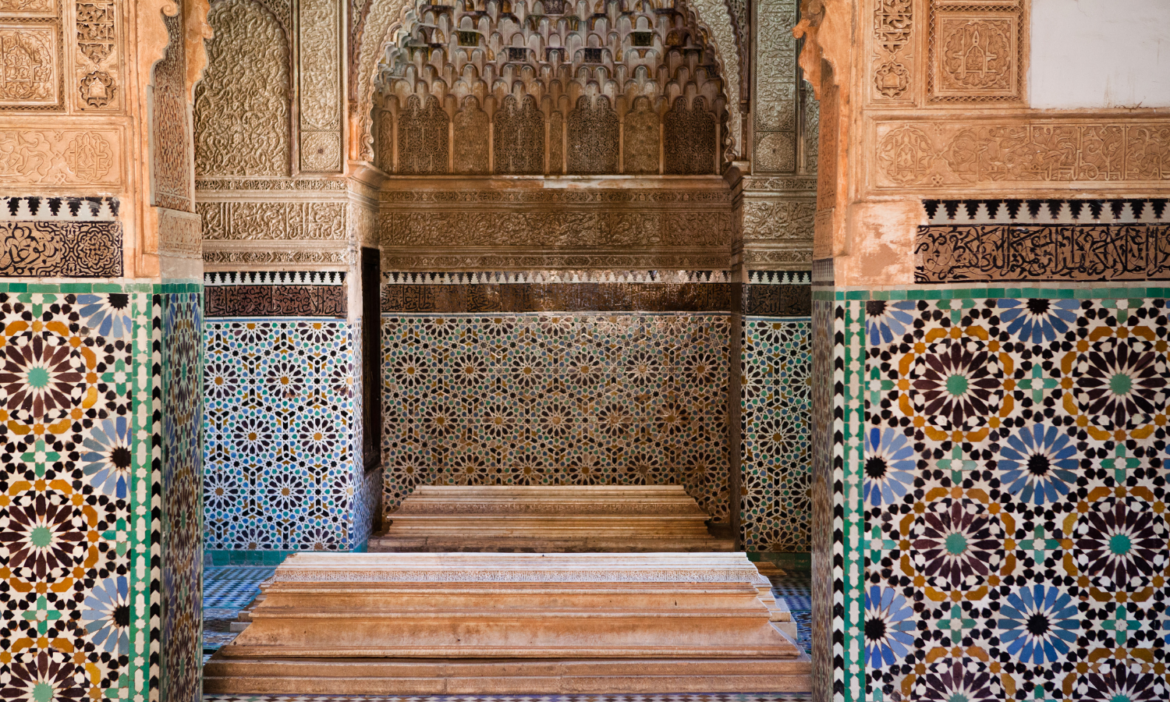
Adjoining the mosque, the Saadian Tombs are a jewel of 16th-century Moroccan art. Walled up in the 17th century, they lay forgotten until their rediscovery in 1917. The Hall of Twelve Columns, with its Carrara marble columns, finely carved stucco and cedarwood ceiling, holds the tomb of Sultan Ahmed el-Mansour.

Our tip: arrive at opening time to avoid the queue. The site is just a stone's throw from the riad, so you can be there within minutes of finishing breakfast.

4. El Badi Palace, “the Incomparable”

Built from 1578 by Ahmed el-Mansour after his victory at the Battle of the Three Kings, El Badi Palace was one of the most sumptuous of its time, adorned with gold, onyx and marble. The Alaouite sultan Moulay Ismail had it dismantled in the 17th century to reuse its materials in Meknes. Today, impressive ruins remain: a vast courtyard with pools, orange-tree gardens and ramparts where storks nest.

Don't miss: the view from the palace terraces over the rooftops of the Medina and, on a clear day, to the peaks of the Atlas Mountains.

5. The Mellah, the old Jewish quarter

On the edge of the Kasbah, the Mellah bears witness to the long history of Marrakech's Jewish community. Here you can visit the Lazama Synagogue and the Jewish cemetery, one of the largest in Morocco. The nearby spice market (Place des Ferblantiers and around) is ideal for picking up saffron, cumin and ras el-hanout.

6. Bahia Palace

To finish, head to Bahia Palace, built at the end of the 19th century by the sultan's grand viziers. Its marble courtyards, inner gardens and painted wooden ceilings are a masterpiece of Moroccan craftsmanship.

Practical information

  • Length of the walk: half a day to a full day, depending on your pace
  • When to go: early in the morning or late in the afternoon, especially in summer
  • Getting there: the Kasbah is about a ten-minute walk from Jemaa el-Fna, and accessible by car
  • Prices and opening hours: there is an entrance fee for the monuments and opening hours may vary, so check with the riad's reception before you set off

“Staying in the Kasbah means having the treasures of the sultans as your neighbours.”

Read also: When to visit Marrakech? · What to do in Marrakech in 3 days? · Discover Riad El Noujoum

🌙 Book your stay at Riad El Noujoum · Tel.: +212 670-505454 · riadelnoujoum50@gmail.com

When to visit Marrakech? Weather and the best time to go, month by month

Marrakech can be visited all year round, but each season offers a different city. Between crisp winter mornings under a brilliant blue sky, gardens in full bloom in spring and the sweltering heat of summer, choosing the right time completely changes the experience. Here is our guide to when to visit Marrakech, depending on your wishes and your budget.

Marrakech's climate at a glance

Marrakech enjoys a semi-arid climate: generous sunshine more than 300 days a year, little rain and wide temperature swings between day and night. Winters are mild during the day but cool in the evening, while summers are very hot and dry. The peaks of the High Atlas, visible from the Medina's rooftop terraces, are often snow-capped from December to March.

Spring (March to May): the ideal season

This is arguably the best time to discover Marrakech. Daytime temperatures generally range between 22 and 30 °C, orange blossom scents the lanes and the gardens (Majorelle, Menara, Agdal) are at their best. It's also the perfect time for an excursion to the Ourika Valley or a hike in the Atlas Mountains.

Our tip: this is peak season, especially over the Easter holidays. Book your riad several weeks in advance.

Summer (June to August): intense heat and a slower pace of life

In July and August, temperatures regularly climb above 38 °C in the afternoon. The city comes alive early in the morning and late in the evening: the souks buzz at dusk and Jemaa el-Fna square is in full swing until midnight. Summer is still a good option for travellers on a budget and those who cope well with the heat.

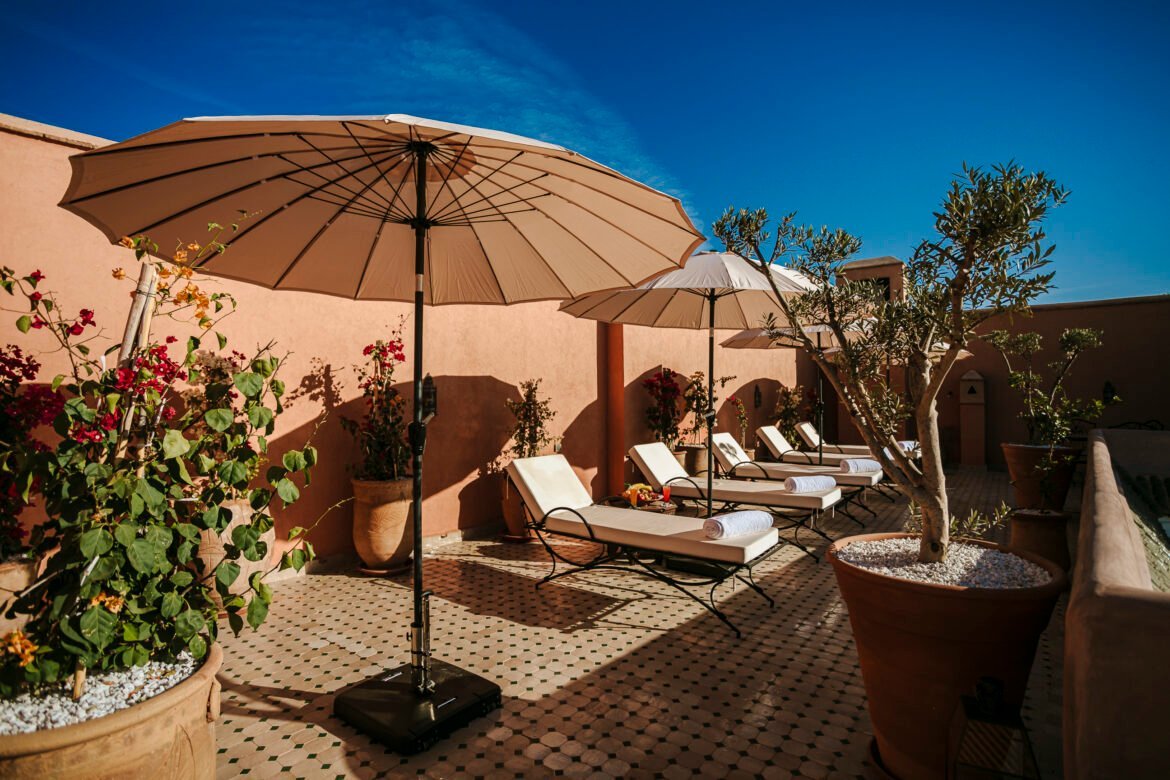
Our tip: go sightseeing early in the morning, take a siesta in the shade of the patio during the hottest hours, and treat yourself to a traditional hammam at the end of the day. A getaway to Essaouira, cooled by the trade winds, also works wonders.

Autumn (September to November): mild weather and golden light

From late September the heat eases and Marrakech becomes wonderfully mild again, with days of around 25 to 30 °C in October. The late-afternoon light on the ochre ramparts is particularly beautiful. There are fewer crowds than in spring, making it an excellent time to explore the monuments in peace.

Our tip: October and November are perfect for combining cultural visits, an outing to the Agafay Desert and starry nights on the roof terrace.

Winter (December to February): sunny days, cool evenings

Winter in Marrakech often comes as a surprise: the days are sunny and pleasant (around 18 to 20 °C), but at night temperatures can drop to nearly 5 °C. It's the ideal time to escape grey European skies, except over the Christmas and New Year holidays, which are very popular.

Our tip: pack a jumper and a jacket for the evenings. At Riad El Noujoum, this is when our suites with fireplaces are at their most charming.

At a glance: which season for which kind of trip?

  • Cultural visits and walks: March to May, October to November
  • Hiking in the Atlas Mountains: April to June, September to October
  • On a budget: June to August, January (outside school holidays)
  • Winter sun break: December to February
  • Honeymoon and romantic getaway: spring and autumn

What about Ramadan?

Travelling during Ramadan is perfectly possible and offers a unique experience: the city truly comes alive when the fast is broken each evening, in a warm and festive atmosphere. Some restaurants and shops adjust their daytime opening hours. The dates change every year according to the lunar calendar, so be sure to check them before booking.

“There is no bad season in Marrakech, only different ways of experiencing it.”

Read also: What to do in Marrakech in 3 days? · Luxury riad in Marrakech: an authentic stay

🌙 Book your stay at Riad El Noujoum · Tel.: +212 670-505454 · riadelnoujoum50@gmail.com

What to do in Marrakech in 3 days? A complete itinerary from the Medina

Marrakech is one of Africa's most enchanting destinations. Its maze-like alleys, colourful souks, secret gardens and spicy flavours make it a city like no other. But what should you do in Marrakech in 3 days so as not to miss a thing? Here is our complete day-by-day itinerary for an authentic experience in the heart of the Red City.

“Marrakech is a city to be lived as much as visited. Every street corner holds a surprise, every encounter a story. Three days are enough to fall in love; a week, and you'll never want to leave.”

Day 1: into the heart of the Medina

Morning: Jemaa el-Fna square and the souks

Start with the legendary Jemaa el-Fna square, whose cultural space is listed by UNESCO as Intangible Cultural Heritage. From the morning onwards it bustles with fresh orange juice sellers, storytellers and snake charmers. Make the most of the morning calm to cross it before the crowds arrive.

Then dive into the neighbouring souks, a labyrinth of alleys where each quarter is devoted to a craft: the Chouara tanneries, dyers, slipper makers, blacksmiths. Take your time to wander, haggle and bring home a few authentic souvenirs.

  • Spice souk: cinnamon, saffron, cumin, ras el hanout – the scents of Marrakech
  • Carpet souk: unique pieces hand-woven by Berber artisans
  • Lantern souk: chiselled copper lamps to take home a little magic

Afternoon: the Ben Youssef Madrasa

A few minutes' walk from the souks, the Ben Youssef Madrasa is one of the most beautiful madrasas (Koranic schools) in the Islamic world. Founded in the 14th century and rebuilt in the 16th by the Saadians, it impresses with the finesse of its zellige tilework, carved cedarwood and hand-chiselled stucco.

Nearby, the Marrakech Museum, housed in the Mnebhi Palace, displays collections of traditional Moroccan art in a sumptuous setting.

Evening: sunset on the rooftop terraces

End the day on one of the terraces overlooking the Medina. As Jemaa el-Fna comes alive with music and smoke from the grills, you'll understand why Marrakech casts a spell on its visitors. Have dinner on the square or in a nearby alley: brochettes, harira, couscous.

Day 2: palaces, gardens and the art of living

Morning: Bahia Palace and El Badi Palace

Bahia Palace, built at the end of the 19th century for the grand vizier Ba Ahmed, is a masterpiece of Moroccan architecture. Its gardens, its rooms adorned with zellige and painted ceilings and its shady courtyards bear witness to the refinement of the era. Allow about an hour for your visit.

A few minutes away, the ruins of El Badi Palace, once nicknamed “the Incomparable”, offer a moving glimpse of the grandeur of the Saadian dynasty. The storks nesting on its ramparts add a poetic touch to the visit.

Right next door, the Saadian Tombs house the richly decorated burial places of the dynasty's sultans. Good to know: Riad El Noujoum is located in this very Kasbah district, a stone's throw from El Badi Palace and the Saadian Tombs.

Afternoon: Majorelle Garden and the Yves Saint Laurent Museum

Next comes one of the most photographed places in the city: the Majorelle Garden. Created by the painter Jacques Majorelle from the 1920s onwards and bought by Yves Saint Laurent and Pierre Bergé in 1980, it is a haven of peace in electric colours, where Majorelle blue contrasts with the green of the bamboo.

Right next door, the Yves Saint Laurent Museum traces the couturier's work and his love affair with Marrakech, in a contemporary building designed by Studio KO.

  • Garden + museum: allow 2 to 3 hours
  • Book your tickets online in advance to avoid the queues
  • The museum shop offers rare editions and quality souvenirs

Evening: dinner in a riad

Nothing captures the soul of Marrakech better than dinner in a traditional riad. Behind their austere walls, these old houses hide flower-filled patios, soothing fountains and generous cuisine: chicken and almond pastilla, lamb tajine with prunes, gazelle horns.

At Riad El Noujoum, the Moroccan breakfast served in the patio is a moment of pure bliss: msemen, honey, fresh cheese and fresh mint tea.

Day 3: wellbeing, spices and a last mint tea

Morning: traditional hammam

The hammam is an institution in Morocco, an ancestral ritual of purification and relaxation. Choose a public hammam in the Medina for the local experience, or your riad's hammam for more comfort and privacy.

A typical treatment includes black savon beldi, a scrub with a kessa glove, a ghassoul clay mask and an argan oil massage. Allow 1 to 2 hours to come out feeling completely renewed. 👉 Discover the hammam rituals at Riad El Noujoum.

Afternoon: the spice square and a cooking class

Spend the afternoon at Rahba Kedima, the spice square, to take home the flavours of Marrakech: Taliouine saffron, rose water, cumin, cinnamon, argan oil. The vendors are generous with explanations and little tastings.

To bring the journey back to your own kitchen, join a Moroccan cooking class: tajine, pastilla or msemen pancakes, guided by a local cook. See our activities and excursions in Marrakech.

End of your stay: one last mint tea

Before heading to Marrakech Menara airport (about 15 minutes from the centre), treat yourself to one last mint tea on a terrace in the Medina. Watch the city go about its life one last time: the muezzin's call, children playing in the alleys… Marrakech will have felt like a waking dream.

Our practical tips for visiting Marrakech

  • Best season: March–April and September–October, for pleasant temperatures (20 to 28 °C)
  • Getting around: the Medina is best explored on foot; for the modern districts, take a petit taxi (metered or with the price agreed before setting off)
  • Currency: the Moroccan dirham (MAD); cards are accepted in hotels and the main shops, but bring cash for the souks
  • Budget: varies according to your preferred level of comfort, including accommodation, meals and visits
  • Safety: Marrakech is a welcoming city for travellers; just beware of fake guides in the souks
  • Language: French is very widely spoken in hotels, restaurants and shops

Where to stay in Marrakech? Our advice: a riad in the Medina

To make the most of your stay, choose accommodation in the Medina. Riad El Noujoum welcomes you in the heart of the Kasbah, right by the Saadian Tombs and El Badi Palace, about ten minutes' walk from Jemaa el-Fna. It can also be reached by car, a rare advantage in the Medina.

Eight rooms and suites named after the stars, with no television so you can truly unplug, a leafy patio with a pool, hammam and massages, home cooking and organised excursions: the perfect place to experience Marrakech from the inside. Discover Riad El Noujoum · See our rooms

FAQ: visiting Marrakech in 3 days

Are 3 days enough to visit Marrakech?

Yes, 3 days let you discover the essentials: the Medina and its souks, the palaces, the Majorelle Garden and a hammam. Add an extra day for an excursion to the Atlas Mountains, Essaouira or the Agafay Desert.

Which area should I stay in in Marrakech?

For a first visit, the Medina is ideal: most of the monuments are within walking distance and riads offer an authentic immersion, peaceful behind their walls.

What are the must-sees in Marrakech?

Jemaa el-Fna square, the souks, the Ben Youssef Madrasa, Bahia Palace, El Badi Palace, the Majorelle Garden and the Yves Saint Laurent Museum – not forgetting the experience of a traditional hammam.

🌙 Book your stay at Riad El Noujoum · Tel.: +212 670-505454 · riadelnoujoum50@gmail.com

Your privacy

This website uses cookies that are essential for it to work. With your consent, it also displays content from third-party services (Google Maps, Trustindex guest reviews) that may set their own cookies. Learn more